There's a moment in Death Stranding 2 where I stopped walking for real. Not in the game — in my head. A long delivery run, a track settling in, and then something quietly off: the music isn't looping the way it usually does. It seems to keep going, breathing, shifting texture without ever really restarting. The kind of detail you'd let slide if you weren't paying it particular attention.
I've been making electronic music for a long time, under the names J Dovy and Monsieur Jean — house, deep house, techno, a bit of jazz and soul, sampling, remixing. That kind of behavior is the sort of thing a producer's ear picks up almost against its will: a musical structure, normally, folds up — it doesn't unfold on its own. The developer in me, a much more recent part of my path, immediately asked the follow-up question: how do you turn a musical intention like that into a piece of software?
I'm not a game audio specialist. What follows is the result of some digging — interviews with Woodkid, the score's composer, cross-checked against what's more broadly known about adaptive music in games. Let's open the hood.
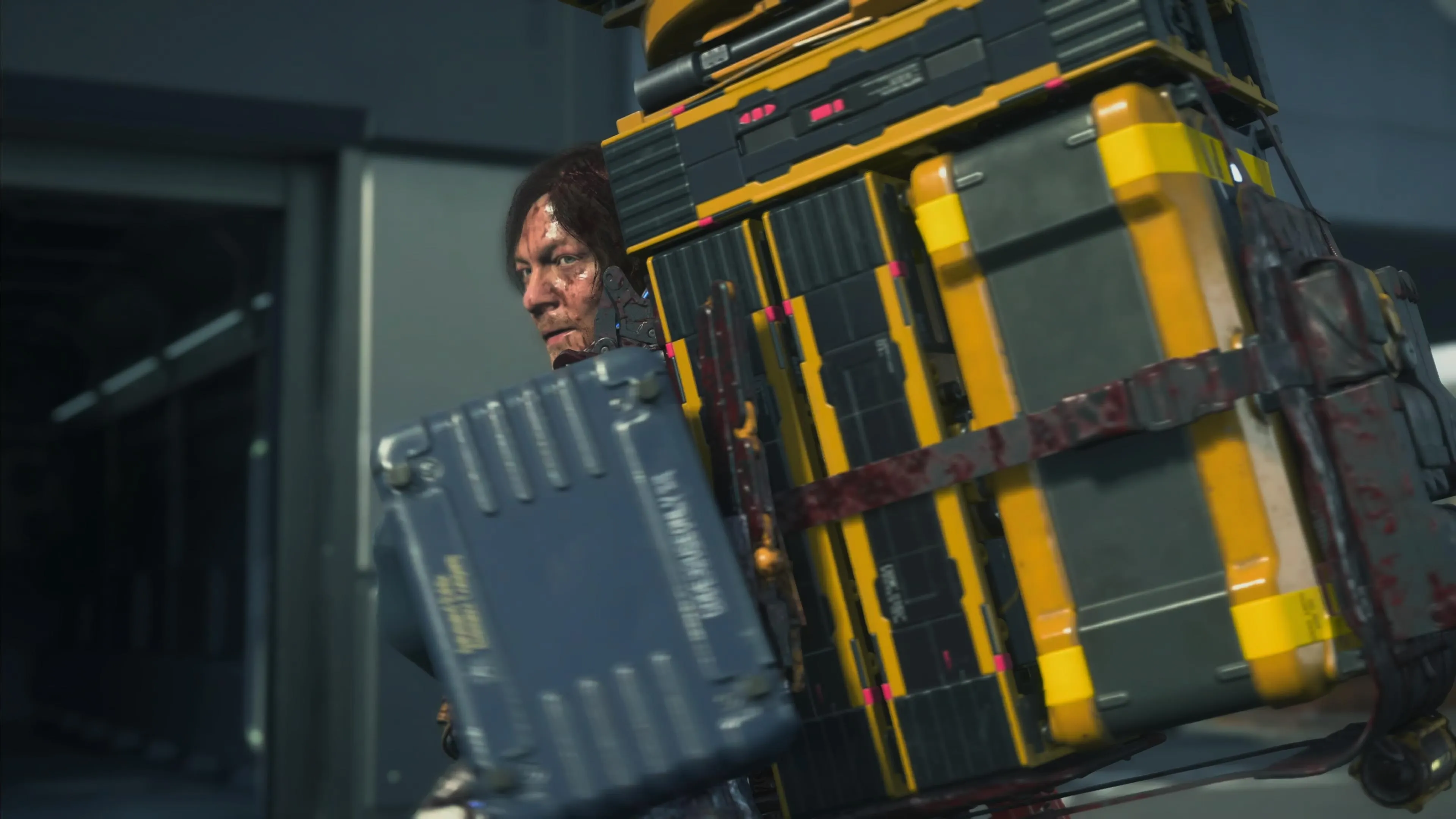
A song that no longer really has a fixed length
A traditional song has a length. Three minutes, four minutes, whatever it is — the composer knows exactly how long the piece they're writing will last. A crossing in Death Stranding doesn't offer that courtesy. Two players can take five minutes or twenty to reach the same point on the map, depending on weather, terrain, or simply how they play.
That's exactly the problem Woodkid describes having to solve. In an interview with NME, the system is described as creating "an infinite number of possibilities for each song, depending on what the player is doing and how fast they're doing it." And, crucially: "Every time you play the game, you'll hear something new."
That much is documented. What interests me is how.
Woodkid's musical origami
To explain it, Woodkid uses his own image, picked up by AFP and carried notably by TV5Monde: "We have to unfold the songs, almost like origami, and sometimes make a version several hours long" (in the original French: « On doit déplier les chansons, presque comme un origami, et en faire une version de plusieurs heures parfois »).
The image works because it's precise. A finished origami has a determined shape — that's the song as heard on the Woodkid for Death Stranding 2 album, sixteen tracks, a "folded", finished version you can listen to like any record. The version meant for the game's engine is the unfolded sheet: the same components — instruments, chords, notes, percussion, textures, voice, breaths, transitions — but laid out flat, available to be folded differently every playthrough.
This origami story isn't a throwaway line Woodkid tossed out. It's literally, technically, what the system he describes does — and that's what we're going to try to understand now.
Opening the hood: adaptive and procedural music
In video games, adaptive music (or interactive music) refers to a score that reacts to the game's state rather than simply looping like a plain recording. It's already well-charted territory, existing independently of Death Stranding 2, and it rests on several techniques that can be combined.
Vertical layering — changing the outfit, not the skeleton
The most common technique is called vertical layering. The principle: the same timeline keeps playing, but certain instrumental layers appear or disappear depending on the situation. This is a classic teaching image from game audio, not an exact description of Death Stranding 2 — but it helps illustrate the general principle:
calm walking
    -> texture + harmony

running
    -> texture + harmony + percussion

tension
    -> texture + harmony + percussion + extra elements
You keep the same musical skeleton and add or remove clothing. Effective, but limited: the underlying structure never actually changes.
Horizontal resequencing — changing the path, not just the floor
Horizontal resequencing goes further: it lets the engine change the very order of musical sections. A linear song follows a fixed path — intro, verse, chorus, verse, chorus, outro. An adaptive system can instead function like a graph, where each section offers several possible exits:
INTRO
  |
SECTION A -- variation A1 / variation A2 / extension / transition
  |
SECTION B -- light instrumentation / full instrumentation / harmonic variation
  |
RESOLUTION
The point here is that a section can be stretched or shortened to match the real duration of a gameplay sequence — exactly the fixed-song-length-versus-unpredictable-crossing problem raised above.
When chords become rules
What Woodkid describes seems to go further than simply chaining large audio blocks. In an interview with PlayFrance (in French), he explains that "each note is essentially reprogrammed in a sampler right inside the PlayStation 5's engine" (« chaque note est comme reprogrammée dans un sampler à l'intérieur même du moteur de la PlayStation 5 »), and that "the music rebuilds itself according to harmonic theory, fairly complex chaining processes, well beyond just switching loops" — all of it "within rules we defined." NME describes the same mechanism from another angle: Woodkid reportedly "fed each element of each track into a procedural generator and taught it to rebuild the songs based on harmonic theory."
In practice, that means the compositional work doesn't stop at slicing whole sections. It goes down to chords, notes, samplers — and to the rules defining which notes can reasonably follow which others. Here's one way to put it (this is this article's own phrasing, not a quote from Woodkid):
The composer no longer just writes a sequence of notes. They also compose the possible relationships between those notes.
The engine itself keeps an autonomy strictly bounded by those choices. It isn't composing anything new: it's navigating a space of possibilities the composer laid out themselves.
A diagram to sum it up (and its limits)
Simplified conceptual diagram — it does not represent Death Stranding 2's official software architecture, only the general principle as it can be inferred from public interviews.
The player enters the equation
A crossing has no fixed length, but a song does. The system has to reconcile two different time scales: the fixed time of a composition, and the unpredictable time of the player. You can picture the result as a chain where the final resolution is delayed or reached differently depending on the situation:
TRACK -> VARIATION -> EXTENSION -> TRANSITION -> HARMONIC VARIATION -> RESOLUTIONAgain, this is a teaching diagram, not a technical description of Death Stranding 2. What public sources do confirm is that the music reacts to the player's actions, movement, speed, and gameplay context — exactly what the NME quote above says.
I should be honest about one thing: my first instinct, watching the game, was that the geographic direction Sam takes might influence how a track extends — as if turning left or right picked a different harmonic branch. It's an appealing idea, and to me it remains a hypothetical example, a useful conceptual sketch for imagining what such a system could do. But I haven't found, to date, any source explicitly documenting a rule like that in the game's actual architecture. The available interviews talk about action, movement, speed and context — not specifically compass direction. I'd rather say that plainly than let a personal hunch pass for a fact.
And what about vocals?
An instrumental texture extends fairly easily: loops, variations, changes in instrumentation. A sung track is a different matter entirely. Lyrics, syntax, phrasing, narrative continuity, the placement of words in time — all of that resists slicing far more stubbornly.
Woodkid addresses this directly in his PlayFrance interview: "the lyrics also have to be procedural: that means leaving room in the middle of words, in the middle of the breaths, for the player to be able to chain into" (« il faut aussi que ces paroles soient procédurales : cela suppose de libérer de la place au milieu des mots, au milieu des respirations, que le joueur puisse enchaîner »). In other words, part of the compositional work is building in, from the writing stage, silent spaces the system can use — otherwise the vocal would break the illusion at the first variation. The challenge isn't just producing a musically elegant loop: you have to keep hearing an actual song.
What we know — and what we're assuming
To lay out honestly where the line sits:
- Documented — recomposition following harmonic theory, work at the level of notes and chords inside samplers, reaction to gameplay/movement/speed, and the procedural handling of vocal breaths: these are direct statements from Woodkid, sourced (PlayFrance, NME, AFP/TV5Monde).
- General techniques, not game-specific — vertical layering, horizontal resequencing, and the notion of procedural music exist independently of Death Stranding 2: they're used here to explain the principle, not to describe the game's exact code.
- Teaching examples, unconfirmed — the ASCII diagrams in this piece, the graphic metaphor, and above all the hypothesis linking Sam's geographic direction to a musical branch selection: these are tools for reasoning, not established facts.
Composing possibilities
In a traditional song, the composer determines what will happen. In a procedural system like Death Stranding 2's, they also determine what could happen. The work is no longer just writing a timeline — it's designing a coherent musical space an engine can move through without ever stepping outside the rules set in advance.
That's exactly where composition and programming meet — and it's probably why a song behaving a little strangely, halfway through a long walk, was enough to make me want to open the hood.
Sources: interviews with Woodkid — PlayFrance (French), NME, and the AFP wire story carried by TV5Monde (French).